Fronton AOC and the Négrette grape
Fronton is the appellation between Toulouse and Montauban, and Négrette is the grape that makes it unlike anywhere else. This guide explains the grape, the soil it grows in and the wines that come out of it, using the practice of one organic estate inside the appellation as the worked example.
Where Fronton is
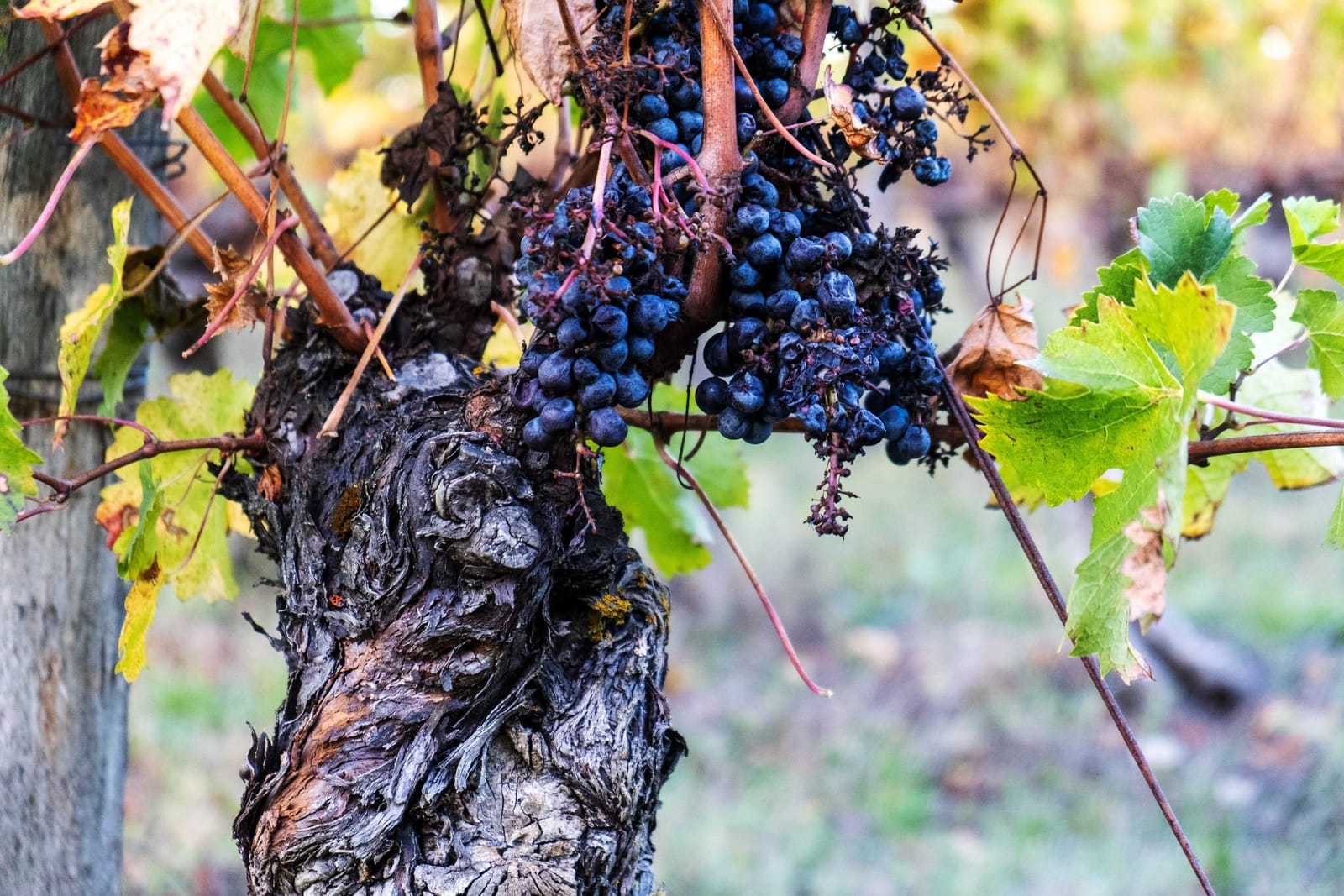
The Fronton vineyard sits north of Toulouse, between the city and Montauban, on the ancient terraces of the Tarn. It is a small appellation by French standards and an unusually coherent one: the terraces give it a single soil story, and the river beside them moderates a climate that would otherwise be hotter and drier.
Château Saint Louis is a 35-hectare estate inside it, at Labastide Saint Pierre, roughly thirty minutes by car from Toulouse airport. The soil under its vines is the local boulbène: sandy, gravelly, clayey and slightly acidic. Everything below describes how one estate works that ground; the appellation is larger than any one grower.
Négrette, also called Pinot Saint Georges
Négrette is the appellation's signature grape and the reason Fronton reds do not taste like their neighbours in the South West. It is grown at scale almost nowhere else. Around Fronton it is also known as Pinot Saint Georges, a local name that has nothing to do with the Pinot family — if you see both names on a label or a tasting sheet, they are the same grape.
It is prized for a distinctive character and a complex aromatic range. At Château Saint Louis the red blends are built on a large majority of Négrette — a minimum of 70% — with Cabernet Franc and a touch of Syrah. One cuvée, Naturellement Négrette, is made from the grape alone, which is the clearest way to meet it.
How the reds taste
Across the estate's range the reds run to red fruit and spice rather than to weight. Chênes is described by the estate in terms of cherry, strawberry and cranberry, with spice and a hint of smoke. Esprit Gaulois, a blend of Négrette and Cabernet Franc, is the aromatic and complex end of the range; Tradition is the house style; L'Esprit and L'Extrême are the top of it. The full set is on the red wine page.
Farmed organically since 2005
The estate committed its vines to organic standards in September 2005 and obtained organic certification for the wine in 2008, after the three years of practice the rules require. The certifying body is ECOCERT.
In practice that means cover crops — oats, faba bean and lupin — bringing nitrogen into the soil from the air and keeping weeds down; mechanical weeding along the vine row instead of chemical herbicides; and, for disease, only Bordeaux mixture and natural sulfur at minimal doses, neither of which enters the vine. Thinning, leaf removal, de-budding and de-suckering are done every year to bring the fruit to full ripeness. From the land to the vine sets out the whole cycle.
In the cellar
The wines are vinified, aged and bottled at the château. Fermentation is in old enamelled, thermo-regulated vats — the temperature control is there to extract colour and tannin at the right pace and to protect the aromatics. No allergens are used in winemaking, and the harvested grapes are not enriched with sugar.
A barrel cellar of 140 oak barrels finishes the job. The reds spend twelve months in oak; the estate's Chardonnay is partly barrel-aged.
Not only red
Fronton is known for red and rosé, but in 1992 the estate planted five hectares of Chardonnay — the only such planting in the Tarn-et-Garonne department. It gives a still white, Chardonnay Bio, alongside La Tour Blanc, and a sparkling wine, Prêt en Bulles, which is 100% Chardonnay. The rosé completes the range.
What the wines have won
The estate's own record, as published in the site footer, is at the Concours des Vignerons Indépendants — the Independent Winemakers Competition: a Gold Medal in 2018 for Tour Saint Louis 2018, Silver in 2018 for Tradition 2015, Bronze in 2018 for the 2016 red, Gold in 2011 for Tradition 2009 and Silver in 2007 for L'Esprit 2005. Medals are awarded to a vintage rather than to a cuvée in general, which is worth remembering when you read any wine label.
Tasting them here
The tasting room sits in the heart of the estate, looking out over the outbuildings, the vines and the farmland around them. Visits are by appointment; the estate is open Monday to Friday, 9am to 12pm and 2pm to 6pm, and outside those hours by arrangement. If you would rather start at the table, read what to eat with Négrette.
Frequently asked questions
What grape are Fronton wines made from?
Négrette, the appellation's signature grape, forms the base of every Fronton red and rosé. At Château Saint Louis the red blends are a minimum of 70% Négrette, with Cabernet Franc and a touch of Syrah; one cuvée, Naturellement Négrette, is made from the grape alone.
Is Négrette the same as Pinot Saint Georges?
Yes. Pinot Saint Georges is the local name for Négrette around Fronton. Despite the name it is unrelated to the Pinot family.
Are Château Saint Louis wines organic?
Yes. The vines have been farmed to organic standards since September 2005 and the wine has been certified organic since 2008, under the control of ECOCERT.
Where is the Fronton vineyard?
North of Toulouse, between the city and Montauban, on the ancient terraces of the Tarn. Château Saint Louis is at Labastide Saint Pierre, about thirty minutes by car from Toulouse airport.
Does Fronton produce white wine?
The appellation itself covers red and rosé. White wine grown in the area is bottled under other labels — at Château Saint Louis the Chardonnay, planted in 1992, gives a still white and a sparkling wine.


